
Share
Good vs. Bad Gas Generator Installations: Why the Details Matter
Installing a natural gas or propane generator isn’t just about placing equipment on a pad and flipping a switch. The quality of the gas installation directly impacts performance, safety, reliability, and lifespan. Whether the generator is protecting a manufacturing facility, healthcare operation, or commercial building, the difference between a good and bad gas install can be the difference between uptime and costly downtime.
What a Good Gas Generator Installation Looks Like
Proper gas installation follows manufacturer requirements, local codes, and best practices developed from real-world experience. For generators from Generac, this means the unit receives consistent fuel delivery under full load without restriction or risk.
Key Traits of Good Installation
- Correct Pipe Sizing – Gas piping is sized based on generator BTU demand, distance from the meter, number of bends, and expected load conditions. Undersized piping is one of the most common (and costly) mistakes.
- Proper Pressure & Regulation – Fuel pressure is verified under load not just at idle. Regulators are correctly staged to maintain stable flow during startup and peak demand. Using regulators that have an internal relief valve is a must.
- Code Compliance – Installations must meet or exceed local and national fuel gas codes, including shutoff valves, sediment traps, and proper venting.
- Thoughtful Routing & Support – Gas lines are routed to minimize pressure loss, protected from physical damage, and securely supported to prevent vibration-related failures. Always use the supplied flex-fuel line.
- Commissioning & Testing – The generator is load-tested to confirm proper fuel delivery during real operating conditions not just a quick startup check.
What Goes Wrong in a Bad Gas Installation
A bad gas install often “works” at first but problems surface when the generator is needed most.
Common Red Flags
- Undersized Gas Lines – Causes hard starts, low power output, nuisance shutdowns, or complete failure during peak demand.
- Skipping Load Testing – Pressure looks fine at idle but drops dangerously when the generator ramps up.
- Improper Regulators or Placement – Leads to inconsistent fuel delivery and engine performance issues.
- Non-Code-Compliant Installations – Missing shutoff valves, improper fittings, or unsafe routing can create serious safety hazards and inspection failures.
- No Manufacturer-Specific Knowledge – Every generator platform has specific fuel requirements. Ignoring the manufacturers’ installation guidelines can void warranties and reduce reliability.
Why This Matters for Generac Generators
Generac generators are engineered for dependable performance but even the best equipment can’t overcome poor installation. Gas supply issues are one of the leading causes of generator startup failures, especially during extended outages when fuel demand is highest.
A properly installed gas system ensures:
- Faster, more reliable startups
- Full-rated power output
- Reduced engine wear
- Fewer service calls and emergency repairs
- Long-term compliance and peace of mind
The Bottom Line
A generator is only as reliable as the system supporting it. When it comes to gas installations, shortcuts cost more in the long run through downtime, repairs, and safety risks.
Work with Wolter’s experienced power experts who understand Generac generator fuel requirements, local codes, and real-world operating conditions so your backup power system is installed right and ready to perform when it matters most. Contact us today to get started.
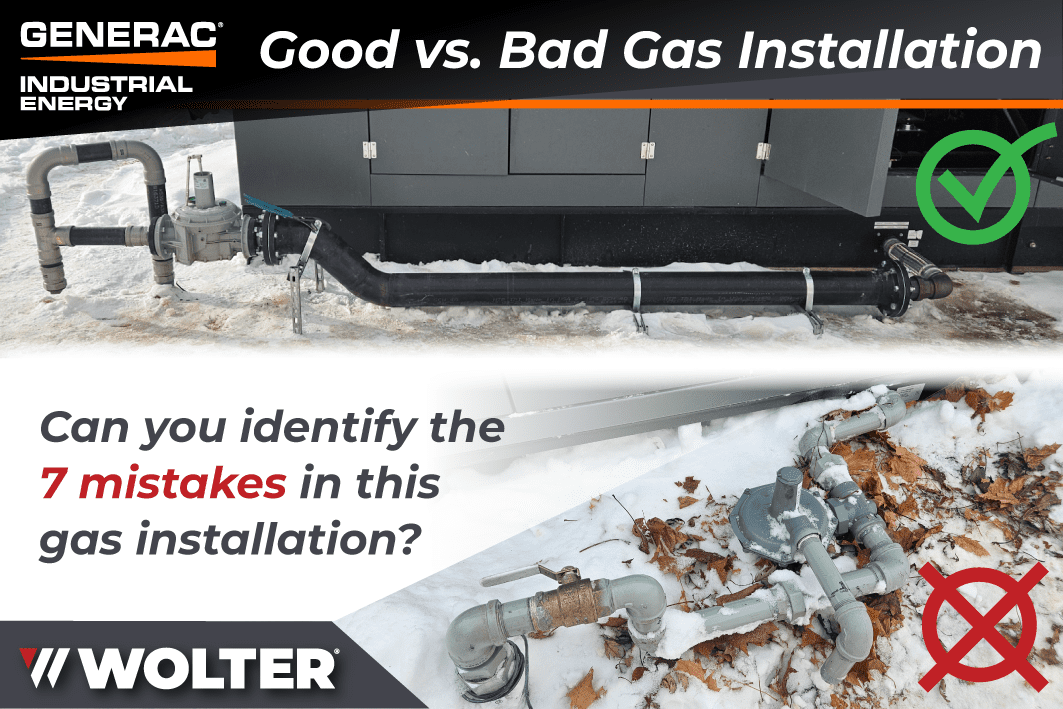
Answer Key: Identifying the 7 Common Gas Installation Issues
Below are seven common problems found in poor gas generator installations and why each one matters:
-
The Regulator Is Installed Too Close to the Generator
Regulators placed too close to the generator can be exposed to heat, vibration, and pressure fluctuations. This can cause inconsistent fuel delivery and premature regulator failure. -
The Regulator Should Be Mounted Higher or Have a Vent Line Extended
Regulators with venting requirements must be installed above potential snow, water, or debris levels. If not mounted high enough, the vent line must be extended to prevent blockage that can lead to dangerous pressure issues. -
Too Many 90-Degree Elbows Are Installed in the Line
Each 90-degree elbow adds resistance and reduces gas flow. Excessive bends can significantly impact pressure delivery, especially under full generator load, leading to hard starts or shutdowns. -
No Drip Leg Is Present
Drip legs (sediment traps) are required to collect moisture, debris, and contaminants before they reach the generator. Without one, internal gas components are at risk of damage and malfunction. -
The Pipe Is Not Oversized
Generator gas lines often require oversizing to compensate for long runs, fittings, and peak demand. A line sized “just right” on paper may still starve the generator during startup or full load conditions. -
No Supports Are Installed to Secure the Line
Unsupported gas piping can sag, vibrate, or stress fittings over time. Proper supports prevent movement, reduce wear, and help maintain long-term system integrity. -
No Flexible Line Is Installed
A flexible fuel line is critical to absorb vibration and movement between the rigid gas piping and the generator. Without it, fittings can crack or loosen, creating leaks and reliability issues.
