
Share
Inventory Picking & Cost Management: How the Right Racking System Improves Profitability
In warehouse operations, profitability often comes down to how efficiently inventory moves through the facility. One of the most overlooked cost drivers in distribution centers is inventory picking specifically the cost per touch. Every time a product is handled, moved, or picked, it adds labor, time, and operational expense. Over thousands or millions of picks each year, these small costs quickly add up.
For organizations focused on long-term cost management, optimizing warehouse racking systems is one of the most effective ways to reduce pick times, minimize touches, and improve overall operational efficiency.
Understanding Cost Per Touch in Warehouse Operations
“Cost per touch” refers to the labor and operational expense incurred each time a product is handled. This includes:
- Picking items from storage
- Repositioning inventory
- Replenishing pick locations
- Moving product between zones
Even minor inefficiencies in layout or racking design can significantly increase these costs. For example, when pickers must travel long distances, reach difficult locations, or handle products multiple times before shipping, the cost per touch rises.
Reducing touches improves efficiency, reduces labor costs, and ultimately increases profitability.
How Racking Design Impacts Picking Efficiency
Warehouse racking systems are more than just storage they directly impact how efficiently workers can access inventory.
A poorly designed racking layout often leads to:
- Excessive travel time for pickers
- Congested aisles
- Difficult-to-reach product locations
- Increased equipment usage
- Higher labor costs
By contrast, a strategically designed racking system can significantly streamline picking operations.
Proper racking design can:
- Reduce travel distance between picks
- Improve product accessibility
- Increase pick density within zones
- Minimize unnecessary product handling
These improvements directly reduce the cost per touch while increasing throughput.
Long-Term Savings Through Smarter Storage
Many organizations focus on the upfront cost of warehouse infrastructure, but the long-term savings from optimized racking systems often far outweigh the initial investment.
When inventory is stored and organized efficiently, companies benefit from:
Lower Labor Costs
Efficient pick paths and accessible inventory reduce the time employees spend searching for or retrieving products.
Improved Space Utilization
Better racking configurations maximize vertical space, allowing facilities to store more product without expanding their footprint.
Reduced Equipment Wear
Efficient layouts decrease unnecessary forklift travel and equipment usage, extending equipment life.
Higher Throughput
Faster picking means more orders processed per shift, increasing operational capacity without increasing labor.
Over time, these savings compound making racking optimization a strategic investment rather than just a warehouse upgrade.
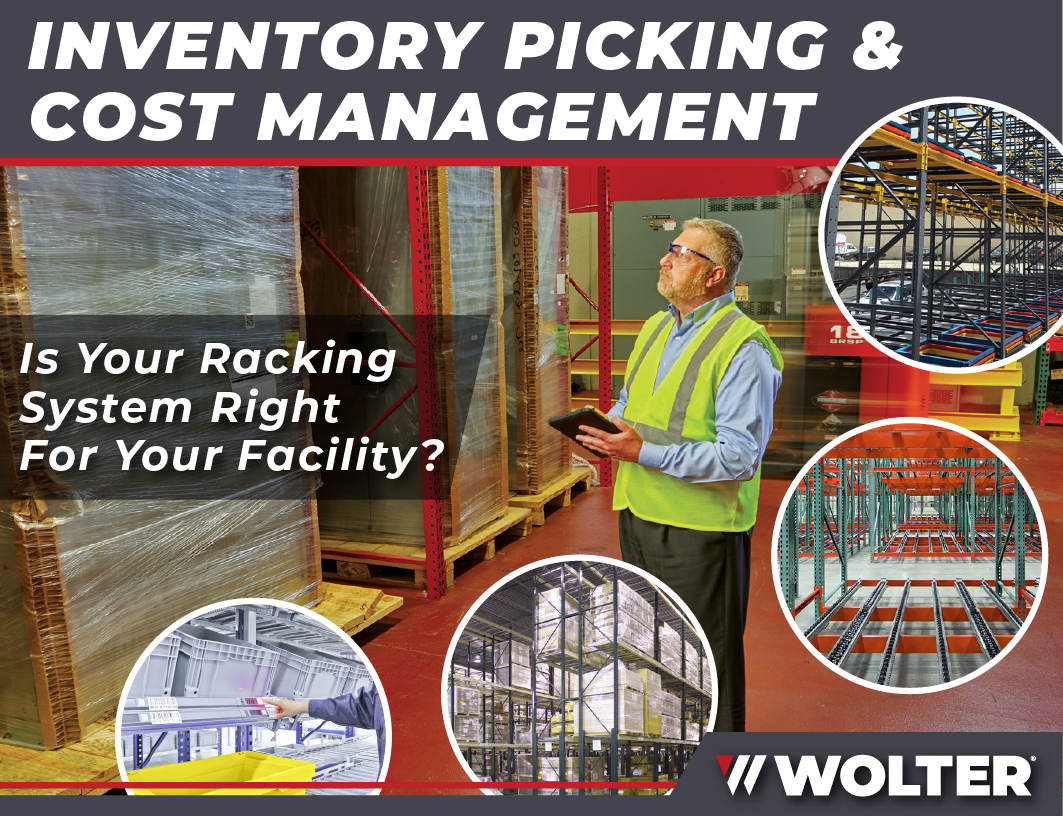
Racking Solutions That Improve Picking Efficiency
Different warehouse operations benefit from different types of racking systems depending on SKU volume, product size, and picking patterns.
Some common solutions include:
Selective Pallet Racking
Ideal for operations that require direct access to a wide variety of SKUs. It offers flexibility and straightforward picking.
Push Back Racking
Allows for higher density storage while maintaining accessibility for faster product rotation.
Flow Racking
Gravity-fed systems that keep products automatically positioned at the pick face, reducing handling time.
Pick Module Systems
multi-level picking structures that maximize vertical space while increasing pick speed for high-volume operations.
When designed correctly, these systems significantly reduce picking complexity and lower cost per touch.
Why Warehouse Optimization Matters More Than Ever
As labor costs continue to rise and supply chains become more complex, companies must find ways to improve efficiency without increasing operational expenses.
Warehouse design especially racking layout plays a critical role in this effort.
By reducing touches, minimizing travel time, and improving pick accuracy, businesses can lower operational costs while increasing productivity.
How Wolter Helps Businesses Reduce Warehouse Costs
At Wolter Inc., warehouse optimization goes beyond equipment. The company works with organizations to design racking and storage systems that improve picking efficiency and reduce long-term operational costs.
By analyzing warehouse layouts, product movement, and picking workflows, Wolter helps businesses implement storage solutions that:
- Reduce cost per touch
- Improve pick efficiency
- Maximize warehouse space
- Support long-term operational growth
The result is a warehouse that works smarter saving money while increasing productivity.
Final Thoughts
Inventory picking is one of the most labor-intensive processes in any warehouse. By focusing on reducing cost per touch and optimizing racking systems, businesses can unlock significant long-term savings.
Investing in smarter storage solutions today leads to a more efficient operation tomorrow one where every pick contributes to greater profitability.
