
Share
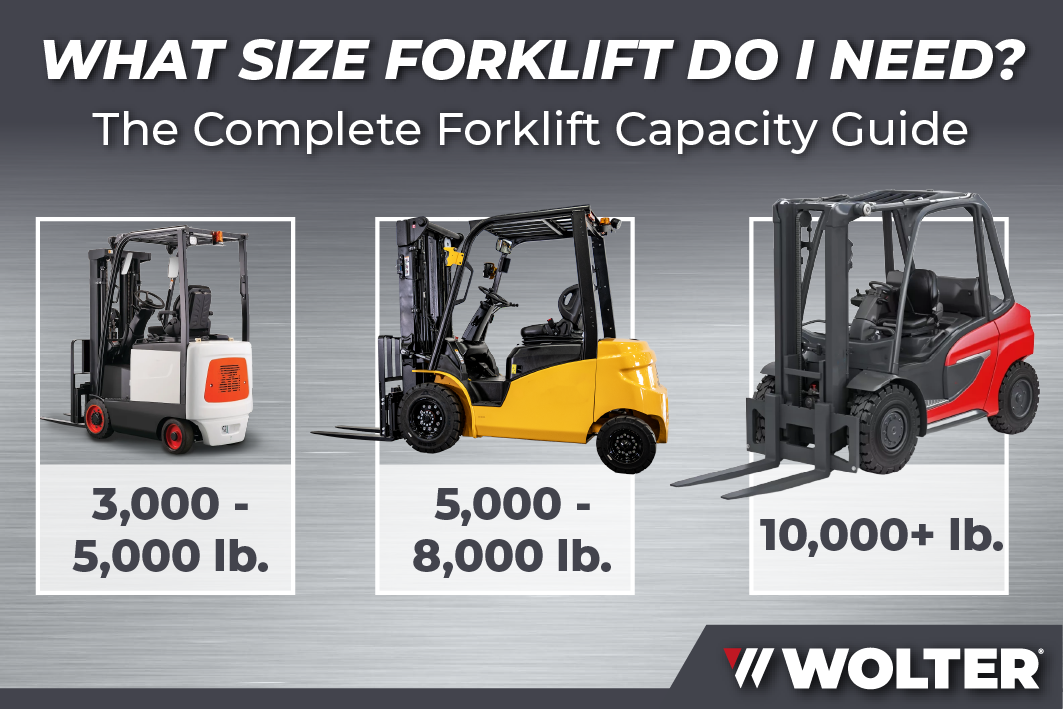
What Size Forklift Do I Need? The Complete Forklift Capacity Guide
Choosing the right forklift size is essential for warehouse safety, productivity, and efficiency. A forklift that is too small can struggle with heavy loads, while an oversized forklift may increase operating costs and reduce maneuverability.
Understanding forklift capacity helps businesses choose the right equipment for their warehouse, manufacturing facility, or distribution center.
What Does Forklift Capacity Mean?
Forklift capacity refers to the maximum weight a forklift can safely lift under specific conditions. Most forklifts are rated using a 24-inch load center, meaning the load is balanced properly on the forks.
However, forklift capacity can decrease based on:
- Lift height
- Load dimensions
- Attachments
- Uneven weight distribution
That is why choosing the correct forklift size is important for both safety and performance.
Common Forklift Capacity Sizes
3,000–5,000 lb Forklifts
These are the most common warehouse forklifts used for:
- Pallet handling
- Indoor warehousing
- Retail distribution
- Loading docks
5,000–8,000 lb Forklifts
Ideal for:
- Manufacturing facilities
- Outdoor loading
- Heavier pallet loads
- Lumber and building materials
10,000 lb+ Forklifts
Heavy-duty forklifts are commonly used in:
- Steel handling
- Construction
- Heavy manufacturing
- Industrial applications
Factors That Determine What Size Forklift You Need
Load Weight
Know the maximum weight your forklift will lift regularly. Always allow extra lifting capacity for safety.
Load Dimensions
Long or oversized loads shift the load center outward, reducing forklift lifting capacity.
Lift Height
Higher lift heights can reduce forklift stability and lifting capability.
Indoor vs Outdoor Use
Indoor forklifts often use cushion tires and electric power, while outdoor forklifts typically use pneumatic tires for rough surfaces.
Forklift Attachments
Attachments like clamps or rotators add weight and can lower forklift capacity.
Signs Your Forklift Is Too Small
You may need a larger forklift if you notice:
- Difficulty lifting loads
- Reduced stability
- Slow operation
- Excessive wear and maintenance
- Rear wheels lifting during operation
Why Proper Forklift Sizing Matters
Using the right forklift size helps improve:
- Warehouse safety
- Productivity
- Equipment lifespan
- Operator confidence
- Operating efficiency
Choosing the correct forklift also helps reduce downtime, product damage, and maintenance costs.
Find the Right Forklift for Your Operation
At Wolter Inc., we help businesses choose the right forklift capacity and material handling equipment for their warehouse and industrial operations.
Contact Wolter Inc. today to find the right forklift solution for your facility.
