
Share
The True Cost of Clean: Ride-On vs. Autonomous Industrial Floor Care
Keeping industrial facilities clean isn’t just about appearances, it’s about safety, productivity, and protecting your investment in equipment and infrastructure. But when it comes to choosing how to maintain your floors, businesses face an important question: Is a traditional ride-on scrubber the most cost-effective solution, or does investing in autonomous floor care deliver greater long-term value?
Let’s break down the true cost of cleaning.
Autonomous Floor Care: The Smarter Alternative
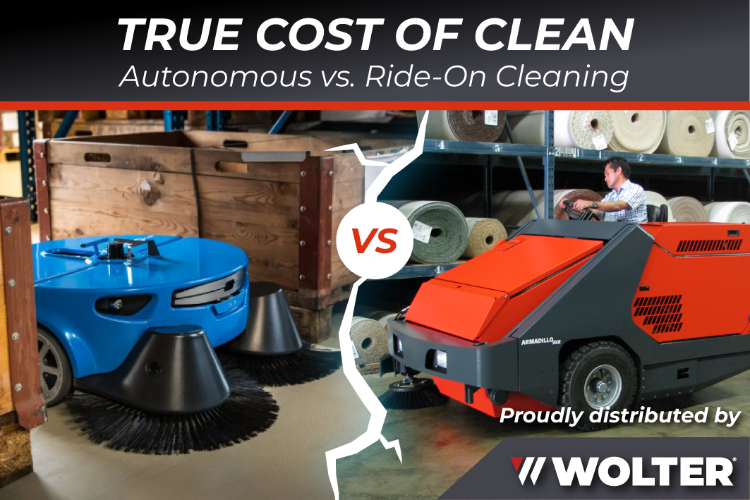
Autonomous scrubbers and sweepers represent the next generation of facility cleanliness. Leveraging AI-driven navigation and smart mapping, they can handle repetitive cleaning tasks with little to no human supervision.
Key benefits include:
- Reduced Labor Costs: A single employee can manage multiple machines while focusing on higher-value tasks.
- Consistent Results: Robots follow set cleaning paths every time – no missed spots, no shortcuts.
- Data & Reporting: Many autonomous machines provide usage analytics and cleaning reports to track ROI and efficiency.
- Scalability: Once deployed, autonomous solutions can expand across shifts and facilities without major increases in headcount.
While the initial investment is higher, the long-term savings in labor and increased productivity can outweigh the upfront spending, especially in facilities with high square footage or frequent cleaning cycles.
Ride-On Floor Care: The Traditional Approach
Ride-on scrubbers and sweepers have long been the go-to choice for warehouses, distribution centers, and manufacturing facilities. Their benefits are well known:
- Lower upfront cost compared to autonomous solutions
- Ease of use for trained operators
- Immediate availability without extensive setup
However, ride-on machines bring hidden costs:
- Labor Dependence: Every cleaning cycle requires a dedicated operator. Labor shortages and rising wages increase this cost year after year.
- Downtime Costs: Operators may be pulled into other tasks, leaving cleaning incomplete or inconsistent.
- Training & Safety Risks: Operators must be trained, certified, and monitored, and human error can lead to inconsistent cleaning or even accidents.
In short: ride-ons offer affordability upfront, but over time, the ongoing cost of labor adds up quickly.
The Cost Comparison
| Factor | Ride-On Scrubber | Autonomous Floor Care |
| Upfront Cost | Lower | Higher |
| Ongoing Labor | High (dedicated operator) | Low (oversight only) |
| Consistency | Variable (depends on operator) | High (repeatable, trackable) |
| Training & Safety | Required + risk of error | Minimal, built-in safety systems |
| Long-Term ROI | Moderate, declining over time | High, especially in labor-tight markets |
The decision between ride-on and autonomous floor care comes down to your facility’s size, labor availability, and long-term goals.
- Smaller facilities with limited budgets may benefit from the lower upfront cost of a ride-on.
- Larger operations struggling with labor shortages or aiming to boost productivity will see faster ROI from autonomous solutions.
At the end of the day, the true cost of clean isn’t just measured in dollars – it’s measured in safety, efficiency, and how well your floors support your people and operations.
Ready to calculate the ROI of automation in your facility? Contact Wolter’s floor care experts today to compare options and find the right solution for your operation, or explore our Industrial Cleaning Equipment Catalog.
